Newsletter
4/1/26
News & Updates | 1st Quarter 2026
By Jeffrey Schmidt
 President’s Message
In our July analysis of the 2025-27 state budget, the Wisconsin Policy Forum noted that the legislation would leave school boards with a choice “between locking in an increase in revenue that they have been seeking in recent years and shielding local property taxpayers.” Continue reading…
Data centers a focus of Forum research, Annual Meeting
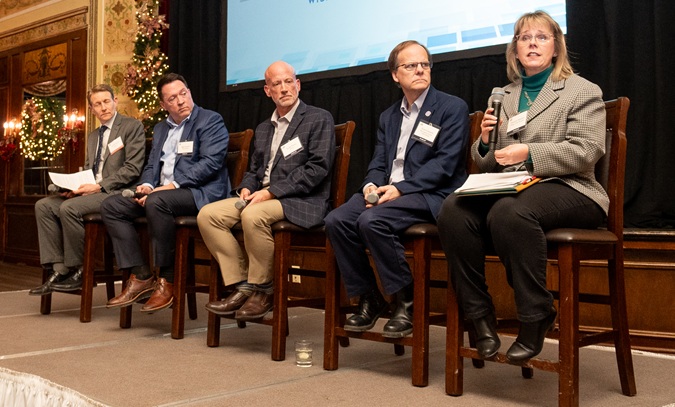
Our 2026 Annual Meeting is in the books, with highlights including a panel discussion about a hot topic: the construction of new data centers to power the global boom in artificial intelligence.
Our discussion focused on proposed data centers in our state. Our panelists were Tom Content, Executive Director, Wisconsin Citizens Utility Board; Bert Garvin, Vice President, We Energies; Tamara Simons, Mt. Pleasant Village Administrator; and Todd Taves, Senior Municipal Advisor, Ehlers.
A starting point for our discussion was the Forum report released in January that explored data centers’ resource usage. It found these facilities would put added pressure on Wisconsin’s energy and water infrastructure, though that would come after many years of declining rates of usage.
The report found that the power needs of data centers appear to be one of the most important areas for state and local policymakers to consider. In particular, it has yet to be fully determined how the costs of new infrastructure will be allocated and who will bear them.
Later in 2026, the Forum plans a follow-up report on this topic. It will give an overview of the fiscal impacts data centers have on local governments, focusing on property taxes, infrastructure impacts, and other costs associated with their development.
Forum event highlights economic, workforce challenges in Green Bay
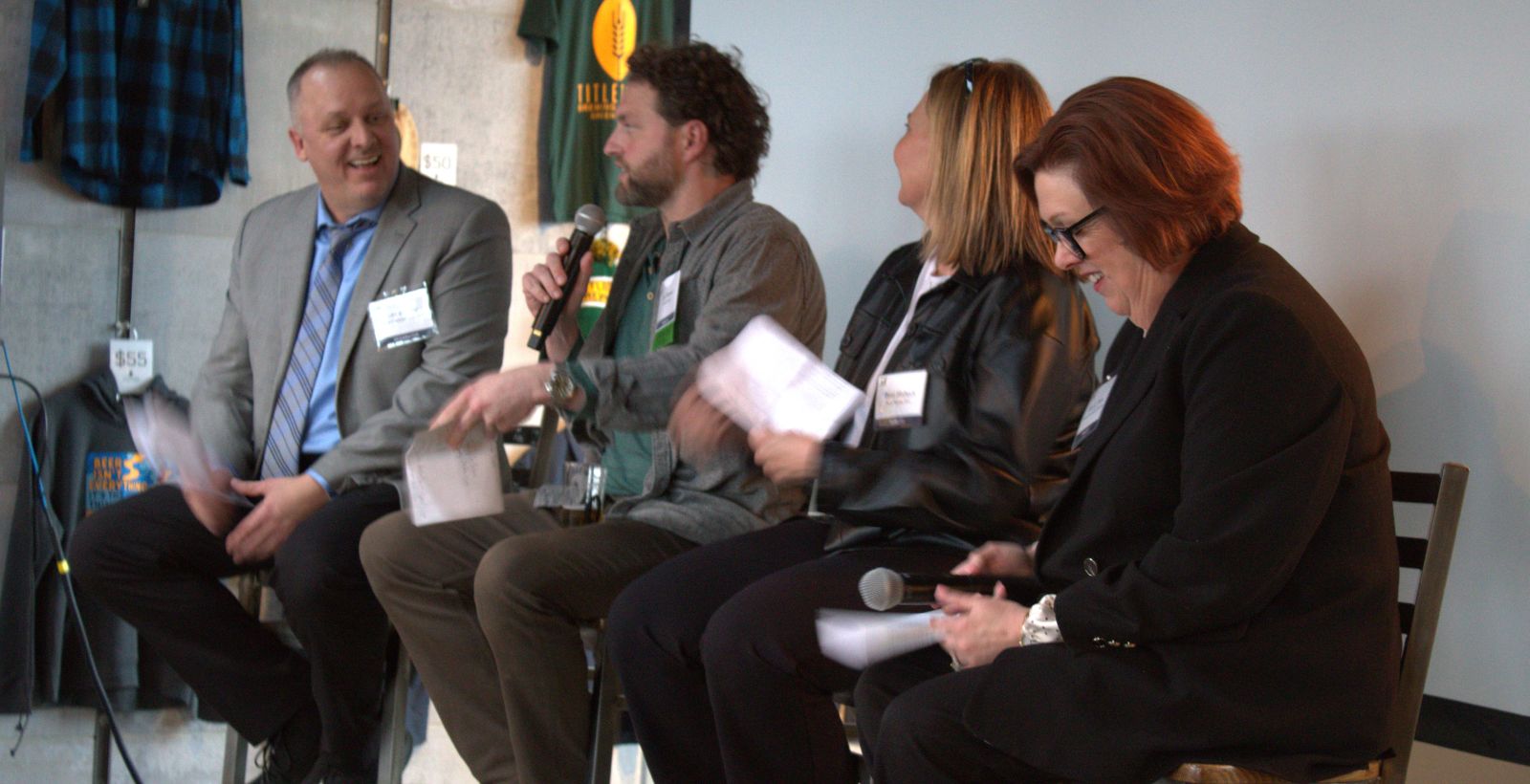
The Forum was delighted to welcome nearly 100 attendees to its first-ever Green Bay event: the latest installment of our Policy in a Pub series on March 10 at Titletown Brewing.
Our special guest, Green Bay Mayor Eric Genrich, helped us kick off this special event, held in partnership with Kane Communications Group.
Our panel included Ian Abston, founder of Forward 48 and director of Hoan Group; Lara L. Fritts, president and CEO of the Greater Green Bay Chamber; and Patti Habeck, president and CEO of New North, Inc.
We heard from Fritts and Habeck – both of whom started in their respective roles in December – about their plans for their organizations. Topics in our broad-ranging, high-energy panel discussion included recent trends in the region’s exports; attracting and retaining workers, especially younger ones, in northeast Wisconsin; and the impact of proposed data centers in the region.
Thanks to everyone who made our first event in northeast Wisconsin so memorable!
Forum Friday looks at aging, substance use disorder in prison and jail populations
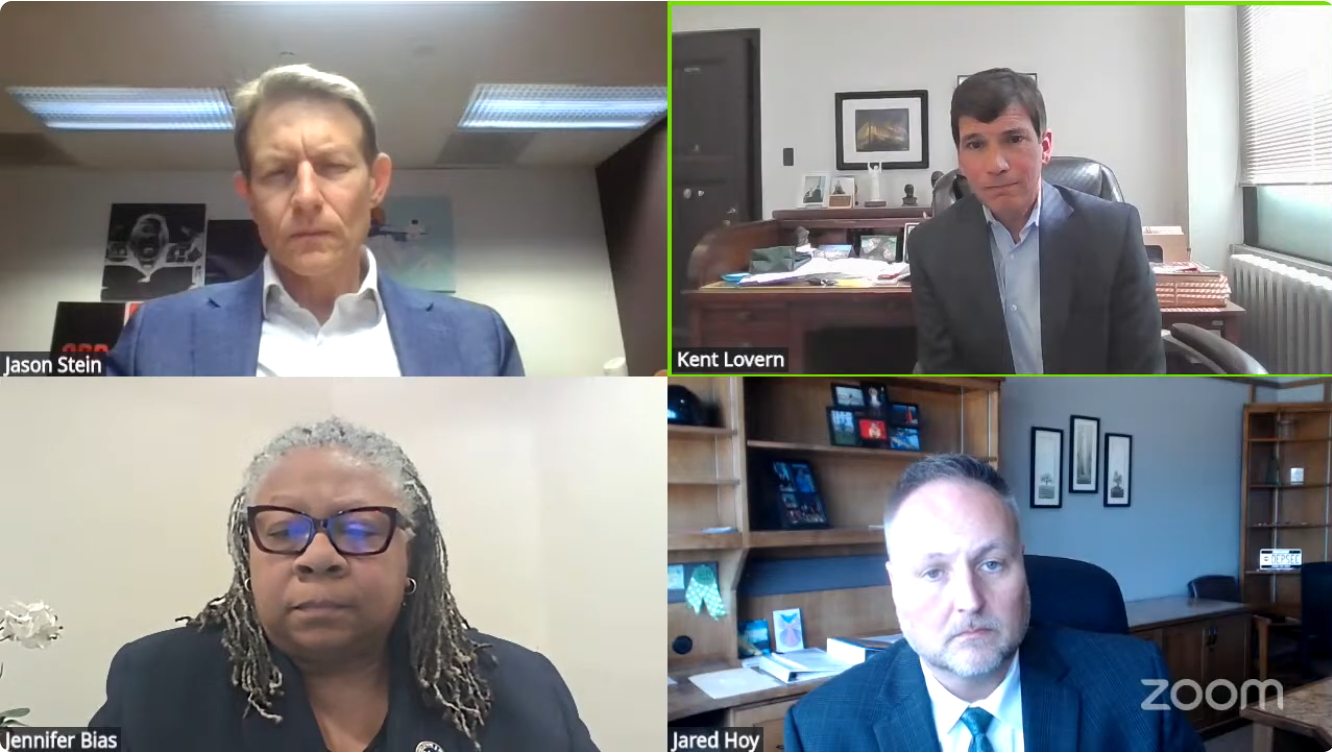
The first quarter of 2026 was packed with Forum events, the most recent of which was the latest installment of our Forum Friday virtual series.
This March 20 event focused on our state’s criminal justice system. Our panelists were Wisconsin State Public Defender Jennifer Bias; Wisconsin Department of Corrections Secretary Jared Hoy; and Milwaukee County District Attorney Kent Lovern.
Our discussion centered on the aging of our state’s defendant and prison populations. We also discussed substance use disorder in these populations, and the increase in the number of Wisconsinites incarcerated for drunk driving.
Our conversation drew upon some of the findings of an upcoming Forum report that we previewed during the event, which surveys the landscape of Wisconsin’s criminal justice system. Watch for this report to be released publicly during the second quarter!
Upcoming Research
Small businesses in Wisconsin: This report, sponsored by the UW System Office of Business and Entrepreneurship, will share key findings from our analysis of data on small businesses in Wisconsin, including notable strengths, weaknesses, challenges, and opportunities. This will include current snapshots and recent trends in the number of establishments, small business openings, exits, employment, wages, and capital investment. These elements will also be examined by geography within the state and by industry sector.
School district finances: This spring, we will continue our annual examination of the proposed budgets for the Milwaukee and Madison public school districts, paying particular attention to the state budget and referenda impacts and long-term fiscal outlooks for the two largest districts in Wisconsin.
Drunk driving trends and policy: Our analysis of state corrections data has revealed a rapid increase since 2020 in the number of individuals in state prisons for operating while intoxicated (OWI) offenses. This brief will take a closer look at recent and long-term trends in these offenses in Wisconsin and examine how state policy changes have influenced them. It will also compare Wisconsin’s OWI policies and its offense and incarceration numbers with those of other states.
Severe weather preparedness: Extreme heat and cold events, floods, and other natural disasters have become more common in recent years. This brief will explore the state of extreme weather-related emergency threats across the state and the work being done by local governments to prepare for them. We will dig deeper into a select group of Wisconsin counties to highlight their planning and preparedness efforts.
Data center impacts: This report will build on our previous analysis on this subject by examining recently finalized and proposed data center project agreements across the state. It will gauge the likely impacts of these projects on local government and school district finances, property taxes and tax levies, the level of financial risk to local governments, and their potential economic and environmental effects. This study is supported by the Metropolitan Milwaukee Association of Commerce, the League of Wisconsin Municipalities, Forward Janesville, the Greater Madison Chamber of Commerce, the Wisconsin REALTORS Association, and the Commercial Association of REALTORS of Wisconsin.
Membership Spotlight: Alverno College
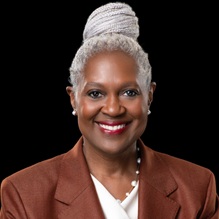 |
| Dr. Christy Brown President christy.brown@alverno.edu |
For more than 130 years, Alverno College has been transforming lives through a powerful combination of liberal arts education and career readiness. Based in Milwaukee and founded in 1887, Alverno College is a four-year independent, Catholic, liberal arts college for women and serves students of all genders through graduate and degree completion programs. Nearly 70 percent of the college’s incoming students are the first in their families to attend college, and it holds the honor of being Wisconsin’s first Hispanic-Serving Institution. Newsweek named Alverno one of America’s Best Colleges for Women 2026, and U.S. News & World Report consistently ranks the college among the top schools in the Midwest for its commitment to undergraduate teaching and innovation.
How has your membership in the Wisconsin Policy Forum been a resource for you and your organization?
“Access to the Wisconsin Policy Forum’s fact-based approach illuminates important issues that have informed Alverno College’s planning and decision-making. WPF’s analyses of trends in the economy, workforce development and education have been instrumental in shaping our understanding of the local environment and how we can best prepare our students and graduates to meet the needs of the K-12 sector and area businesses. Equally useful as we plan for the College’s future, the data tools available through WPF provide valuable insights regarding the strengths and weaknesses of Milwaukee post-pandemic, as well as the challenges that many residents continue to face in terms of job growth and income stagnation.”
Thank You!
In these polarized times, we are especially grateful for the support of our members and sponsors. Thank you for reading our research, attending or tuning in for our events, participating in our committee meetings, and maintaining your membership with us.
We are supported by hundreds of corporations, nonprofits, local governments, school districts, and individuals from across the state of Wisconsin. The following members provide particularly generous support that ensures Wisconsin will continue to benefit from having one of the nation’s most successful nonpartisan, independent public policy research organizations.
Pillars of Public Policy

Sentinels of Civil Conduct